
Common Injuries Tsawwassen Tennis Players Face
Tennis is a fantastic, lifelong sport that keeps your heart rate up and your mind sharp, but it also places intense, repeated demands on your body. The explosive power of a serve, the repetitive torque of a heavy topspin forehand, sprinting laterally across the court, and stopping on a dime all place immense stress on your shoulders, elbows, wrists, knees, and ankles.
For recreational players in Tsawwassen, waking up with a stiff shoulder or an aching elbow might seem like a normal part of the game, just something to play through or ice down later. However, pain that keeps returning, intensifies during a match, or begins affecting your everyday movements is your body’s way of asking for help. Understanding the mechanics behind the most common tennis injuries can help you recognize problems early, prevent long-term damage, and make smarter decisions about your training and recovery.

The Most Common Tennis Injuries in Tsawwassen
Tennis Elbow
Despite its name, you don't have to be a tennis player to get tennis elbow, but the sport certainly creates the perfect storm for it. Clinically known as lateral epicondylitis, this overuse injury involves inflammation or micro-tearing of the tendons on the outside of the elbow.
For tennis players, it is typically triggered by repetitive gripping, late contact on a backhand, or the snapping motion of the wrist. Suddenly playing four times a week when you usually play once, switching to a stiffer racket, or using dead strings can drastically increase the load these tendons endure. The pain is usually most noticeable when gripping your racket, turning a doorknob, or pouring a cup of coffee. If this sharp, burning ache continues rather than fading with normal rest, it requires proper assessment.
Shoulder Injuries
The shoulder is the powerhouse of your tennis game, heavily recruited during serves, overhead smashes, and high volleys. However, repeatedly forcing the arm through these extreme overhead ranges of motion can spell trouble when your strength, mobility, technique, or training loads are unbalanced.
Common shoulder issues include rotator cuff tendinitis and impingement. You might feel a sharp pinch at the top of your serve or a dull ache that keeps you awake at night. Because shoulder problems can stem from a variety of mechanical failures like poor core rotation forcing the shoulder to overwork, persistent symptoms should never be brushed off as simple muscle soreness.
Wrist Injuries
Your wrist acts as a hinge and a shock absorber, working constantly with your hand and forearm to control the racket head. The modern game’s heavy reliance on extreme grips and aggressive topspin forces the wrist into awkward, loaded positions.
Repetitive flicking motions can irritate the tendons, leading to persistent discomfort. This pain can weaken your grip, fundamentally altering how you swing. When you compensate for wrist pain, you often inadvertently transfer that stress up the chain to your elbow or shoulder. If wrist pain interferes with your ability to generate power or control the ball, a clinical assessment can help pinpoint the exact tissue at fault.
Knee Pain
Tennis involves constant, violent momentum shifts. Frequent acceleration, rapid deceleration, deep lunging for drop shots, and split-step changes of direction place massive, repeated stress on the knees.

Conditions like patellar tendinitis (often called jumper's knee) or meniscus irritation are frequent complaints. You might notice this pain most sharply when pushing off to chase a wide ball, decelerating to hit a groundstroke, or simply trying to walk down the stairs the morning after a tough match. It is vital to look at your overall training volume, footwear, and lower body strength rather than assuming knee pain is just an unavoidable tax for playing on hard courts.
Ankle Sprains and Lower-Body Injuries
The lateral (side-to-side) nature of tennis makes ankle injuries a constant threat. An awkward landing after a serve, stepping on a stray ball, or simply losing your footing while changing directions can easily result in an ankle sprain.
When you sprain an ankle, the ligaments are stretched or torn, compromising the joint's stability. Returning to the court too quickly without properly rehabilitating the joint's strength and balance (proprioception) significantly increases your risk of re-injury. Effective recovery involves much more than waiting for the swelling to go down; the ankle must be functionally prepared to handle the explosive demands of the sport.
How to Prevent Common Tennis Injuries
Warm up before playing. Spend 5–10 minutes on dynamic movements like jogging and arm circles, followed by gentle mini-tennis, to safely prepare your body for full-speed play.
Build strength and mobility. Strengthen your core, legs, and shoulder stabilizers to absorb the physical shock of the game and protect vulnerable joints.
Increase your playing load gradually. If you're returning from a break, slowly build up your match frequency and intensity to let your muscles and tendons safely adapt.
Check your technique and equipment. An improperly sized grip, excessive string tension, or poor footwork forces your arm to overwork and places undue strain on your upper body.
Give your body time to recover. Rest between demanding sessions. Playing through pain alters your biomechanics and can turn minor inflammation into chronic tissue damage.
When to Get Tsawwassen Physiotherapy for a Tennis Injury
When rest isn't enough, professional intervention is your next vital step. Tsawwassen physiotherapy doesn't just treat the site of your pain; we treat the root cause. If you come in with tennis elbow, we look at your entire kinetic chain rather than just putting ice on your arm. We use hands-on manual therapy to alleviate acute pain, followed by specific eccentric loading exercises to rebuild damaged tendons. We also assess your shoulder and core—because if your core is weak, your forearm often has to overcompensate to generate power.
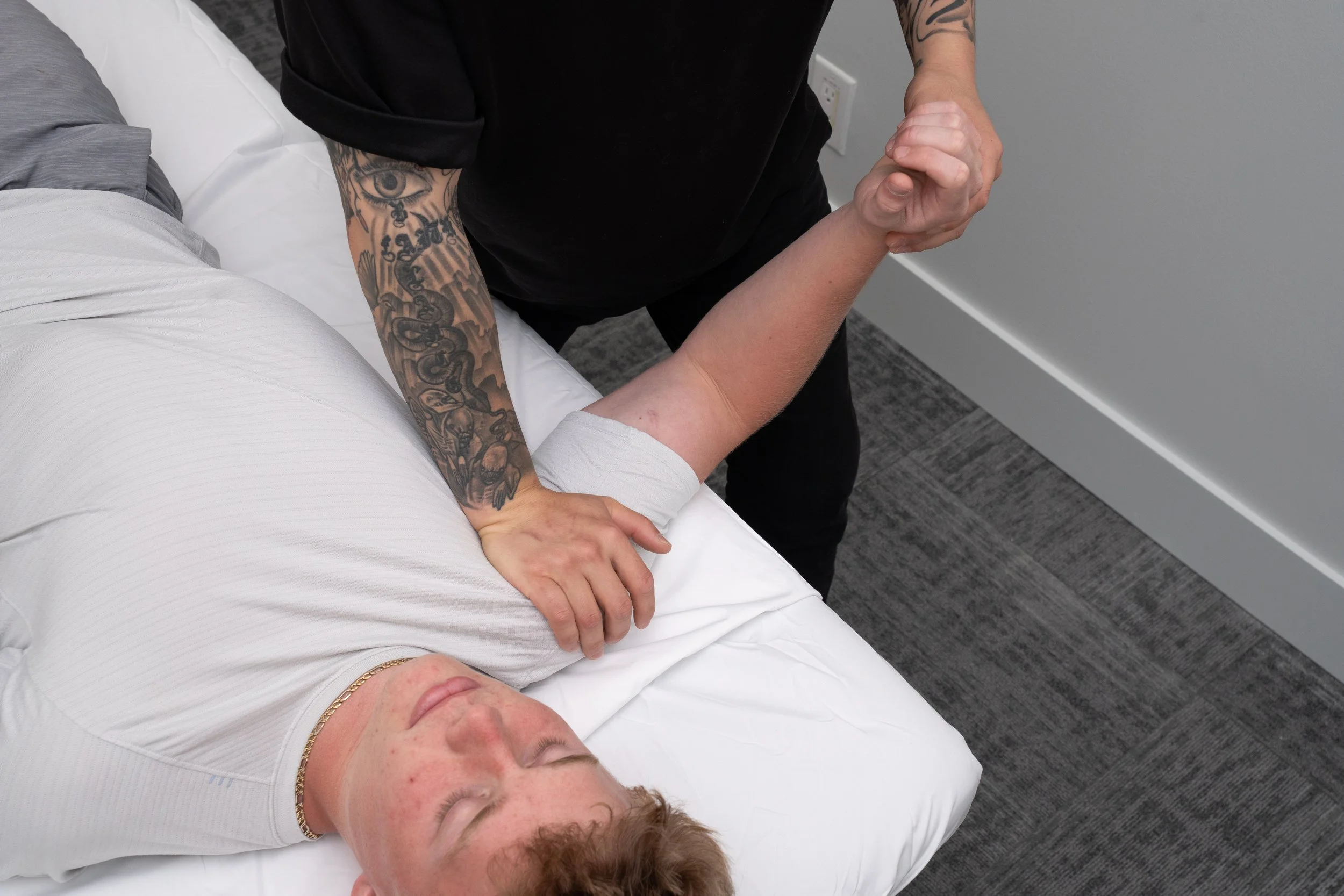
At Monument Health + Physiotherapy, we genuinely understand how frustrating it is to be sidelined from the sport you love. That is why our goal is to simulate the physical demands of tennis right inside the clinic. Your physiotherapist works one-on-one with you to build a customized program using agility drills, rotational strength exercises, and plyometrics. We focus heavily on progressively practicing your specific sporting movements so you feel strong and confident stepping back onto the baseline.
For anyone looking for targeted sports rehab in Tsawwassen, our welcoming team is here to support your journey back to full health. We believe your rehabilitation should be as dynamic as the game itself. If pain is keeping you off the court or making it difficult to play comfortably, we have a compassionate team at our Tsawwassen physiotherapy clinic who would love to help you safely return to the sport. You can easily book an assessment online or reach out to us directly to get started.
Frequently Asked Questions About Tsawwassen Physiotherapy for Tennis Injuries
-
You should consider a clinical assessment if your pain persists for more than a few days, repeatedly returns every time you play, noticeably worsens during a match, limits your range of motion, or prevents you from participating at your normal level. Early intervention is always faster and easier than treating a chronic, long-term injury.
-
Effective sports rehabilitation involves a detailed mechanical assessment, hands-on manual therapy for pain relief, targeted strengthening exercises, movement and posture retraining, and a gradual progression toward the explosive physical demands of your sport. We tailor the exact approach to your specific injury and athletic goals.
-
We are conveniently located at 101-102 1777 56th Street, Tsawwassen, Delta, BC V4L 2B2, right next to the Tsawwassen Town Centre Mall. To make your visits as easy as possible, we offer free parking in the lot directly in front of our clinic.
-
We recommend that new physiotherapy clients book an Initial Assessment, which is a comprehensive 45-minute appointment currently listed at $130. We offer convenient 24/7 online booking, or you can call our friendly front desk directly at 604-813-9716. You do not need a doctor's referral to book physiotherapy with us.
-
Yes, we do! Our comprehensive physiotherapy services include all types of sports injuries and return-to-sport rehabilitation. We proudly work with active individuals across South Delta, treating everything from running injuries and golf-related back pain to soccer ankle sprains and heavy lifting injuries.