
A Beginner’s Guide to Starting Your Tsawwassen Yoga Journey
Starting yoga can feel intimidating when you are new. You may wonder if you are flexible enough, strong enough, or familiar enough with the poses to keep up. The good news is that beginner yoga is meant to meet you where you are. You can begin with tight hips, sore shoulders, poor balance, limited mobility, or years away from regular movement. However, for many people, yoga is a practical way to improve mobility, reduce everyday tension, support posture, and create a steady movement routine. It can also work well alongside physiotherapy, massage therapy, kinesiology, or personal training if your goal is to move better and feel stronger.
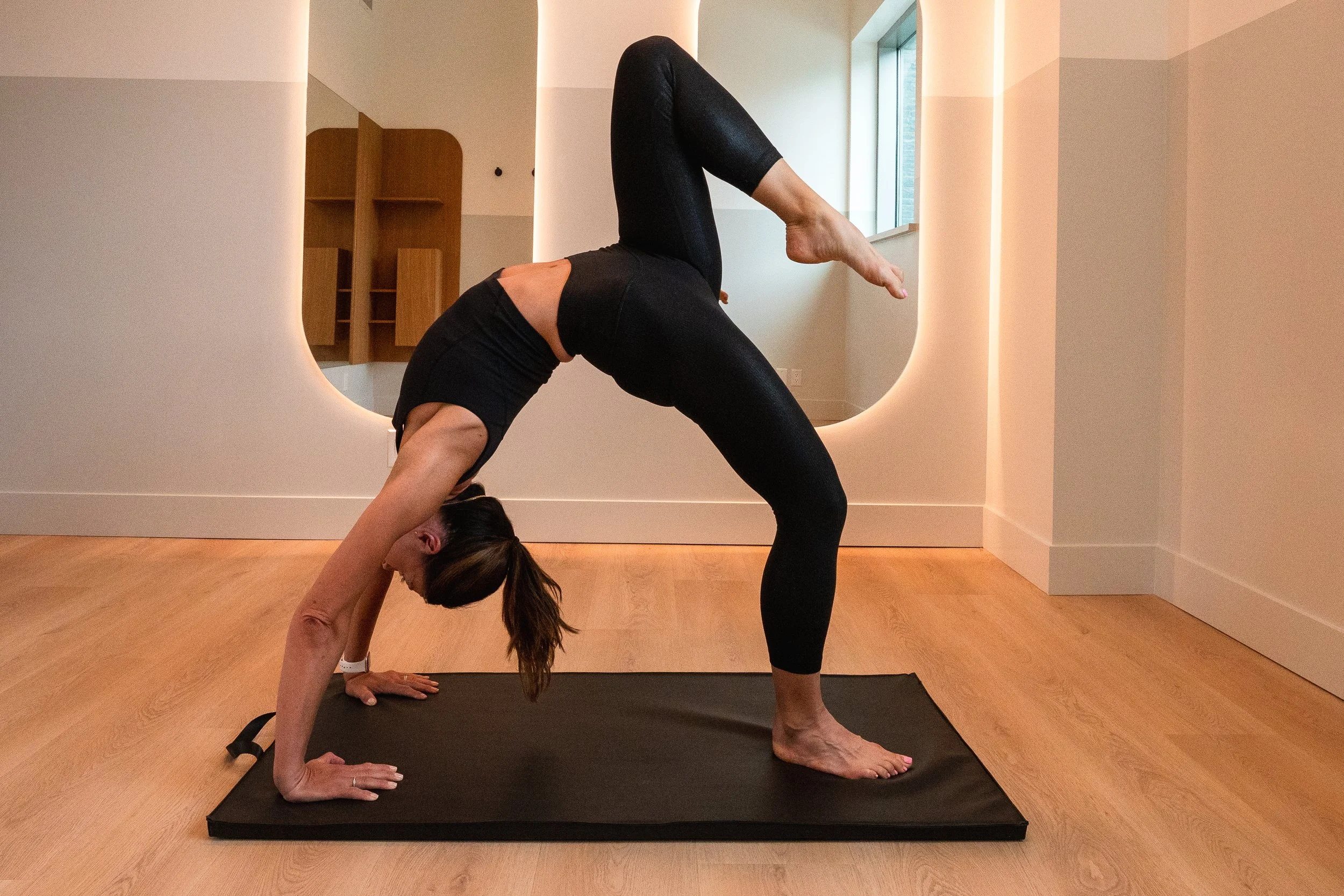
What to Expect in a Tsawwassen Yoga Class
Your first class will usually begin with simple breathing and gentle movement. From there, you may move through standing poses, floor-based stretches, balance work, and slower holds designed to improve awareness and control.
The focus is typically on alignment, mindful movement, and breath work. You are encouraged to pay attention to how your body feels in each position and you’ll learn how to place your feet, relax your shoulders, lengthen your spine, or move through poses with better control.
You can expect instruction, guidance, and options. A good beginner class gives you permission to modify. If a pose feels too strong, you can take a gentler version. If your balance feels shaky, you can slow down. If your hamstrings, hips, or shoulders feel tight, you can work within your current range.
You can also expect yoga to challenge you in quiet ways. Holding a posture, breathing steadily, and staying aware of your body can take effort. However, time, that effort can help build strength, balance, flexibility, and confidence.
How to Prepare for Your First Yoga Session
A great place to start is to wear clothing that feels comfortable and gives you room to move. You should be able to bend, reach, sit, and stretch without feeling restricted. Leggings, joggers, shorts, breathable tops, or fitted athletic clothing are all good options as long as they let you move with ease.
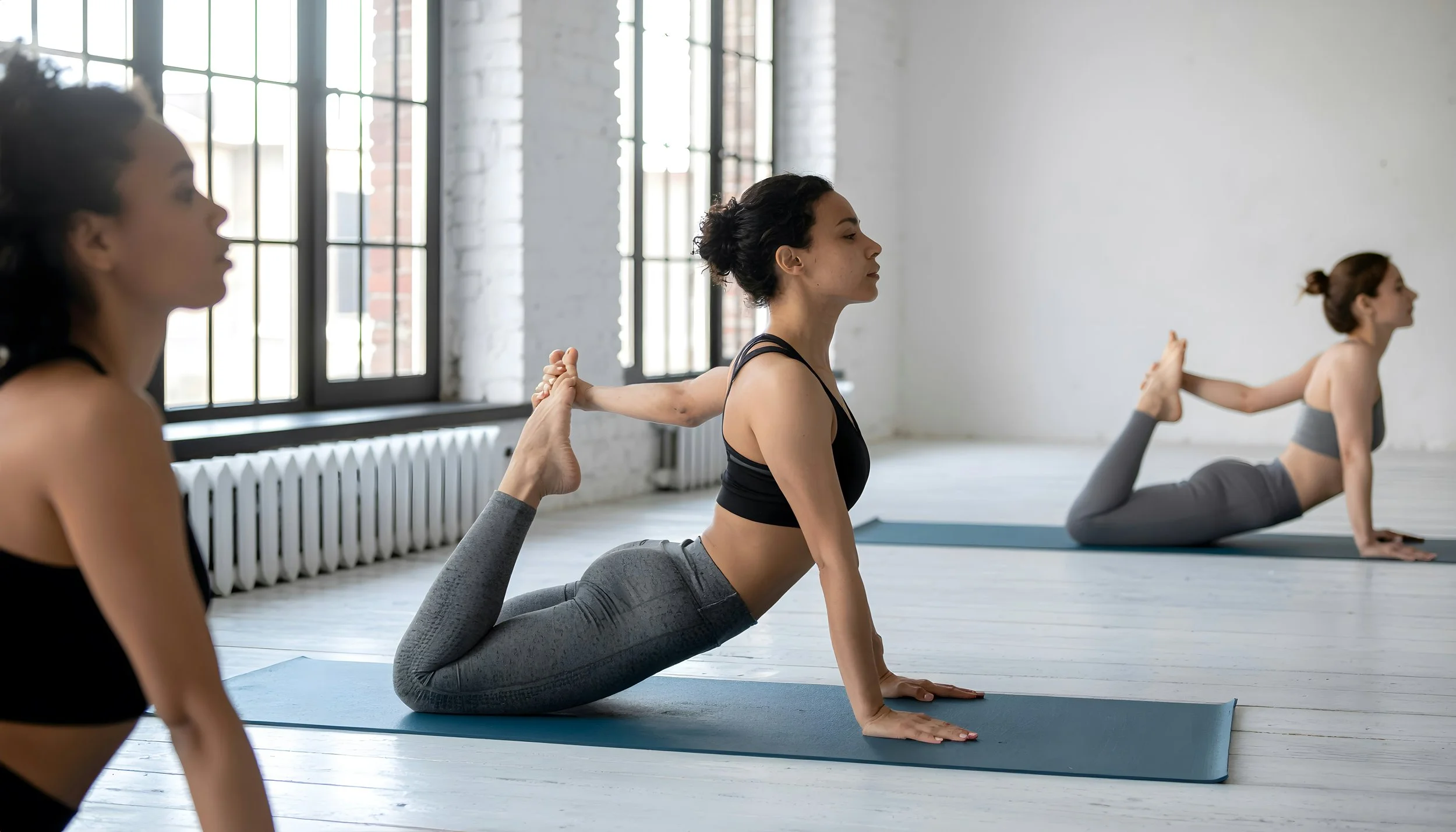
It also helps to bring water and arrive a few minutes early. That gives you time to settle in, choose a spot that feels comfortable, and ask any questions before class begins. If you feel nervous, let the instructor know it is your first class. They can offer extra guidance, suggest simple modifications, and help you feel more at ease.
Try to keep your meal light before class. A heavy meal right before yoga can make twisting, bending, and forward folds feel uncomfortable. A small snack earlier in the day is usually easier to manage.
Most of all, come in with a realistic mindset. Your first class is about learning the space, the pace, the instructor’s cues, and how your body responds. You do not need to get every pose right. You are simply building familiarity, and that foundation gets stronger each time you show up.
The Benefits of Yoga (Even for Beginners)
A regular yoga practice can support several everyday health goals, especially when you are just getting started. Some of the most common benefits include:
Better flexibility
Beginner yoga helps your muscles and joints move through a wider range over time. This can make everyday movements feel easier and less restricted.Less stiffness
Gentle stretching can ease tightness in areas like the hips, back, shoulders, and neck, especially if you spend long hours sitting, driving, or working at a computer.Improved balance
Many yoga poses help you build steadiness and control. This can be especially helpful for older adults, beginners, and anyone returning to movement after time away.Greater body awareness
Yoga teaches you to notice how your body feels as you move. You become more aware of what feels tight, weak, strong, or unsteady.Support for posture
Yoga can help you pay more attention to how you sit, stand, breathe, and move. Over time, this can support better posture and reduce everyday tension.Better recovery for active people
For people who golf, run, garden, play pickleball, or stay active in other ways, yoga can support recovery by improving mobility and helping the body move more freely.More confidence with movement
Beginner yoga helps you build trust in your body. As you learn to move with more control, other activities like walking, lifting, stretching, and recreational sports can feel more manageable.A calmer mind and body
Controlled breathing and slower movement can help reduce the feeling of being wound up, especially through the neck, shoulders, and back.
Choosing the Right Tsawwassen Yoga Class
Choosing the right class is about more than finding a time that works. If you are new to Tsawwassen Yoga, look for a class that feels beginner-friendly, well-guided, and safe for your current body.
A good beginner class should offer:
Clear instruction and individual attention: Smaller classes can make it easier for the instructor to notice your form and offer guidance when needed.
A pace that matches your ability: If you are just starting out, look for gentle, foundational, or all-levels classes before trying anything fast or intense.
Modifications when needed: You should be given options if a pose feels too difficult, uncomfortable, or unsuitable for your body.
A focus on safe movement: The class should help you understand alignment, control, and breath, rather than pushing you into advanced poses before you are ready.
A clean, welcoming space: The environment should feel calm, professional, and easy to settle into, especially if you feel nervous about your first class.
Support beyond the yoga mat: A class offered within a clinic setting can be helpful because yoga sits alongside services like physiotherapy, kinesiology, massage therapy, and personal training.
An understanding of everyday movement: For people in Tsawwassen and South Delta, yoga can support the body through common activities like walking, gardening, golfing, pickleball, desk work, and general fitness.
If you are exploring options for Yoga in Tsawwassen, Monument Health give beginners a clear and supportive way to start, in a clinical environment that already focuses on movement, rehabilitation, strength, and long-term health. Our wider expertise in physiotherapy, kinesiology, massage therapy, and personal training gives the classes a practical, body-conscious foundation. You can expect guided instruction, attention to alignment, breath work, and mindful movement, all within a space focused on helping people move with more confidence and ease.
Frequently Asked Questions About Yoga in Tsawwassen
-
Yes. A beginner-friendly yoga class is designed to help you learn gradually. Monument Health’s foundational yoga class is suitable for all levels and focuses on alignment, breath work, and mindful movement.
-
For most beginners, one class per week is a good starting point. It gives your body time to adapt and helps you build the habit without feeling overwhelmed. The goal is consistency. A steady weekly class will usually do more for your body than an intense start that fades after two weeks.
-
No. Flexibility is something you develop through practice. Many people start yoga because they feel stiff, tight, or disconnected from movement.
-
Yoga may help improve mobility, body awareness, and muscle tension. If stiffness is linked to pain, injury, or a recurring issue, consider speaking with a physiotherapist or qualified health professional.
-
Yoga can build strength, especially through controlled holds, balance work, and bodyweight movement. If your main goal is strength, you may also benefit from personal training, kinesiology, or strength circuit classes.
-
You can book through Monument Health’s online booking system or contact us directly if you need help finding the right class.