
Physio vs. Kinesiology: Which One Do I Need for My Back Pain?
If you wake up one morning in Tsawwassen with a sharp twinge in your lower back, or if you’ve been battling a dull, nagging ache after long days at the office, your first instinct is likely to seek help. You know you need to see someone, but when you look at the booking page for Monument Health, you might pause.
“Do I need a Physiotherapist? or do I need a Kinesiologist?”
It is the most common question we hear at our front desk. In the world of rehabilitation, the lines can sometimes seem blurred. Both professionals deal with the human body, both prescribe exercise, and both want to get you pain-free. However, their approaches, training, and focus areas differ in significant ways.
Understanding the difference between Physiotherapy and Kinesiology is the key to faster recovery. In this guide, we will break down exactly what each discipline does, how they treat back pain, and how we utilize both here in South Delta to get you back to your active lifestyle.
The Short Answer: The "Architect" and The "Builder"
Before we dive deep, here is a simple analogy we like to use at Monument Health Canada.
Think of your body as a house that has suffered some structural damage (your back pain).
The Physiotherapist is the Architect and Engineer. They come in first to assess the damage, diagnose exactly what is broken (is it a disc? a muscle? a joint?), and do the immediate repair work to stop the "leak" (pain). They create the blueprint for recovery.
The Kinesiologist is the Master Builder. Once the immediate danger is over, they take the blueprint and reinforce the structure. They strengthen the walls (muscles) and ensure the foundation (movement patterns) is solid so the house doesn't break again in the next storm.
For many back pain sufferers in Tsawwassen, the magic happens when you use both.
What is Physiotherapy? (The Diagnostic Experts)
Physiotherapy is a regulated healthcare profession focused on diagnosing, treating, and preventing injury and disease. When it comes to back pain, a Physiotherapist is often your first port of call, especially in the acute phase (the first few days or weeks after injury).
The Physiotherapist’s Toolkit
At Monument Health, our Physiotherapists use a variety of hands-on techniques and modalities to reduce pain and restore mobility.
Diagnosis: Physiotherapists are primary care practitioners. You do not need a doctor's referral to see one. They are trained to perform orthopedic tests to tell you why your back hurts.
Manual Therapy: This involves hands-on mobilization of the spine and soft tissue work to release tight muscles and stiff joints.
IMS (Intramuscular Stimulation) / Dry Needling: A powerful technique for releasing deep, persistent trigger points in the back muscles.
Pain Management: Using modalities and education to help down-regulate your nervous system.
When to Choose Physiotherapy in South Delta
If you are currently in pain, Physiotherapy is likely your starting point. You should book with a Physio if:
The pain is new or acute: You just hurt your back gardening or lifting groceries.
Movement is restricted: You literally cannot turn your head or bend over to tie your shoes without sharp pain.
You have nerve symptoms: You feel tingling, numbness, or shooting pain down your leg (sciatica).
You need a diagnosis: You want to know exactly what is wrong before you start exercising.
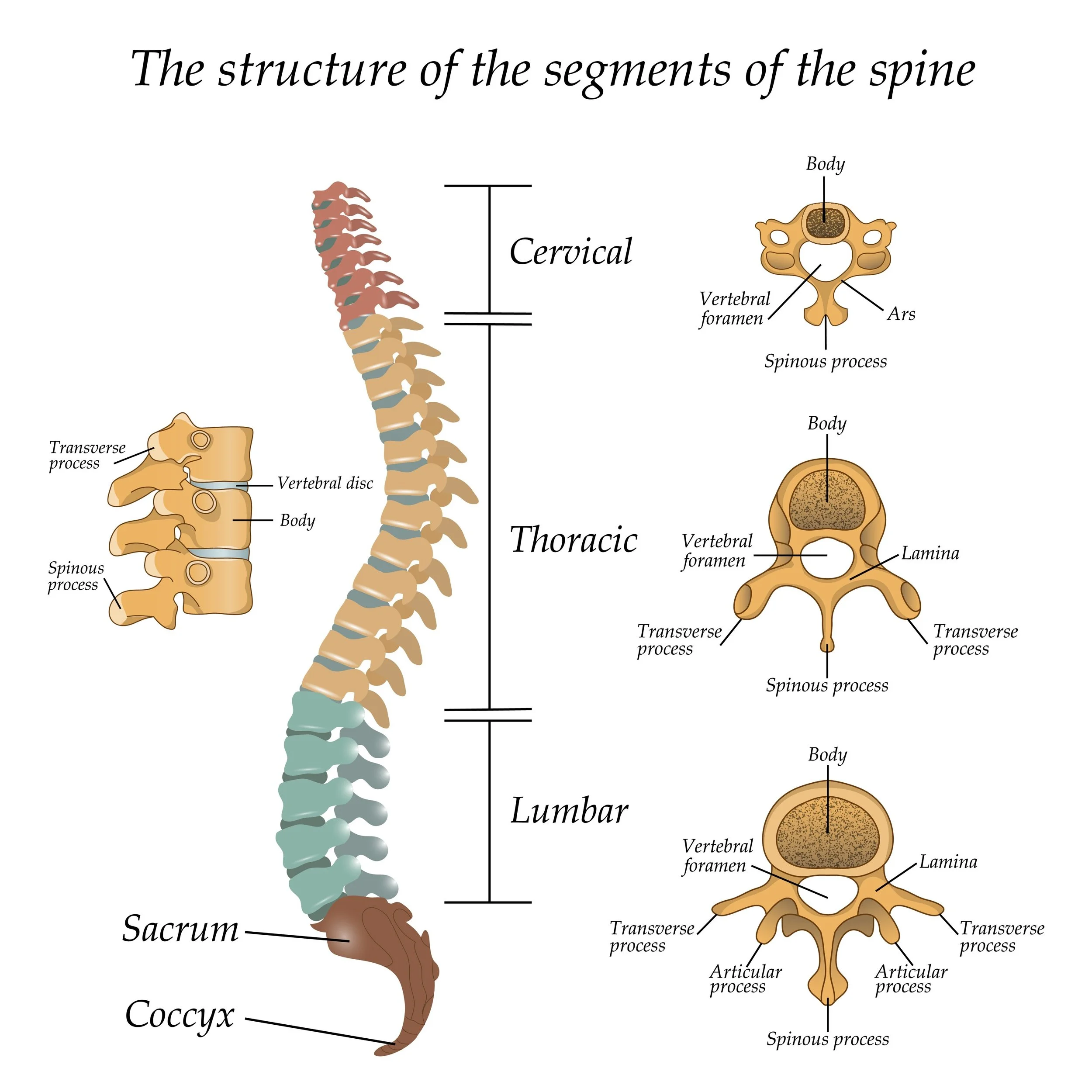
Understanding the complexity of the lumbar spine (lower back) helps explain why a Physiotherapist's diagnosis is crucial before heavy exercise begins.
What is Kinesiology? (The Movement Experts)
Kinesiology is the science of human movement. A Kinesiologist (often referred to as a "Kin") holds a university degree in human kinetics or exercise science. They are experts in biomechanics, anatomy, and exercise physiology. While a Physio might spend time treating you on a table, a Kinesiologist will spend almost all their time with you in the gym area of our Tsawwassen clinic. Their goal is Active Rehab.
The Kinesiologist’s Toolkit
Kinesiologists don't just count reps; they analyze how you move and correct the dysfunctions that caused the back pain in the first place.
Biomechanical Analysis: They watch you walk, squat, and move to identify imbalances (e.g., "Your glutes aren't firing, so your lower back is doing all the work").
Core Strengthening: Teaching you how to properly engage your deep core muscles, not just your "six-pack" muscles.
Functional Training: Exercises that mimic your real life in South Delta, whether that’s swinging a golf club or hiking the boundary bay dyke.
ICBC Active Rehab: If your back pain is from a car accident, Kinesiologists lead the active recovery programs funded by ICBC.
When to Choose Kinesiology
You should book with a Kinesiologist if:
The acute pain has settled: You aren't in agony, but your back feels weak or stiff.
You have chronic, recurring pain: Your back "goes out" once a year, and you want to stop that cycle.
You want to return to sport: You need to bridge the gap between "not hurting" and "playing 18 holes of golf."
You want to improve posture: You sit at a desk all day and know your posture is contributing to your pain.
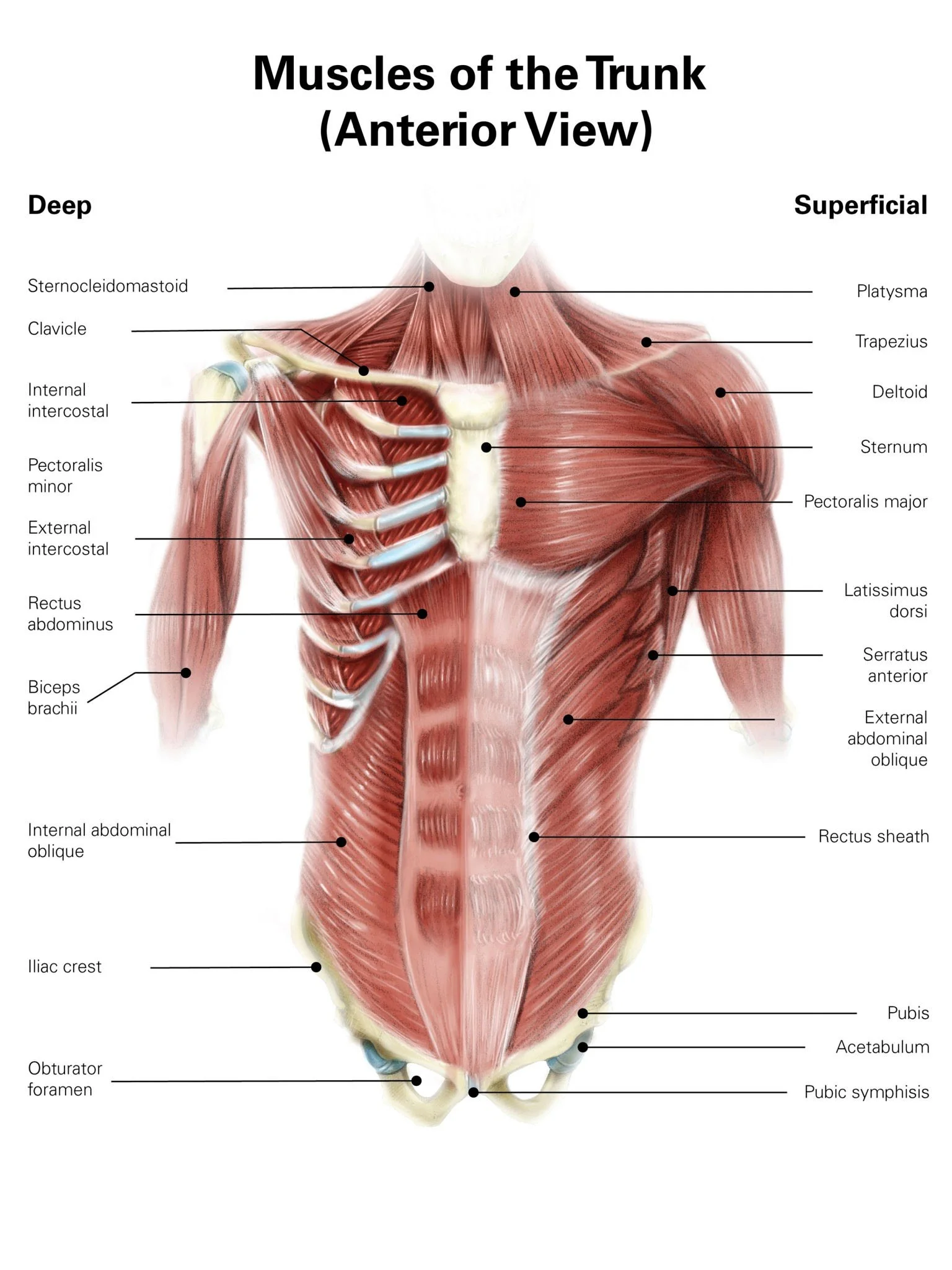
Kinesiologists focus on the deep stabilizing muscles shown above, which act as a natural corset to protect your spine.
The "Active Rehab" Approach: Why Monument Health Uses Both
Here is the secret that many clinics miss: Passive treatment alone rarely fixes back pain permanently.
Getting a massage or manual therapy feels amazing. It reduces pain temporarily. But if you walk out of the clinic and return to the same poor movement patterns, weak posture, and lack of core strength, the pain will return. This is the "revolving door" of treatment we try to avoid.
At Monument Health, we champion a collaborative model.
The Ideal Patient Journey
Let’s look at a hypothetical patient, "Sarah," a resident of Tsawwassen.
Phase 1: The Acute Phase (Physiotherapy) Sarah hurts her lower back lifting a heavy box. She is in significant pain. She comes to Monument Health and sees a Physiotherapist. The Physio assesses her, rules out serious disc injury, uses manual therapy to mobilize her stuck lumbar joints, and gives her gentle mobility exercises. After 3 sessions, her pain drops from an 8/10 to a 2/10.
Phase 2: The Transition (Physio + Kinesiology) Sarah feels better, but she is terrified of lifting boxes again. Her Physio introduces her to a Kinesiologist. The Physio updates the Kin on Sarah’s specific injury. The Kin takes over the rehabilitation.
Phase 3: The Strengthening Phase (Kinesiology) The Kinesiologist teaches Sarah how to hip hinge (bend correctly) and strengthens her glutes and deep core. They progress from simple floor exercises to weighted movements.
Phase 4: Independence Sarah is now stronger than she was before the injury. She understands her body mechanics. She is discharged with a gym program she can do at the local recreation center in South Delta.
Does Insurance Cover Both?
This is a practical consideration for many of our clients.
Extended Health Benefits: Most insurance plans (SunLife, Pacific Blue Cross, Canada Life, etc.) have separate buckets for Physiotherapy. Some plans combine Kinesiology under Physio, while others have a specific category for Kinesiology. It is always worth checking your specific plan.
ICBC: If you have been in a motor vehicle accident, ICBC creates a robust allowance for both Physiotherapy and Kinesiology (Active Rehab). In fact, ICBC is a huge proponent of Kinesiology because the research shows that active exercise is the best way to recover from whiplash and back trauma.
5 Signs You Need Kinesiology for Your Back Pain
If you are still on the fence, here are five signs that you need to add Kinesiology to your routine at Monument Health:
You treat the pain, but it keeps coming back. This suggests a mechanical issue or weakness that passive therapy isn't fixing.
You are afraid to move. This is called "kinesiophobia" (fear of movement). A Kin will guide you through safe motion to rebuild your confidence.
Your posture is poor. If you slump at your desk or stand with a swayback, you need muscle re-education.
You want to get fit, but don't know where to start. A Kin is like a Personal Trainer with a medical background. They are the safest way to start exercising if you have a history of pain.
You have "glute amnesia." If you sit all day, your butt muscles essentially forget how to work. This forces your lower back to take over. A Kin wakes those glutes up.
Quick Comparison Guide
To make it easy for our South Delta community, here is a quick cheat sheet:
| Feature | Physiotherapy | Kinesiology |
|---|---|---|
| Primary Goal | Diagnosis, Pain Relief, & Mobility | Strengthening, Biomechanics, & Prevention |
| Best For | Acute Pain, New Injuries, Post-Surgery | Chronic Pain, Weakness, Return to Sport |
| Treatment Style | Hands-on (Manual Therapy) + Exercise | Hands-off (Active Exercise & Coaching) |
| Environment | Private Treatment Room | Gym / Exercise Floor |
| ICBC Coverage | Yes (Early Access & Treatment) | Yes (Active Rehab Programs) |
In Conclusion: We Are One Team
Whether you start with Physiotherapy or Kinesiology, the most important step is simply starting. Back pain has a way of shrinking your world—making you say "no" to golf, "no" to playing with the kids, and "no" to walks at Centennial Beach.
At Monument Health Canada, we are proud to offer a team where Physios and Kins talk to each other. We don't guard our patients; we share them, ensuring you get the right expert for the right stage of your recovery.
Ready to leave back pain behind?
If you are in Tsawwassen or South Delta and are tired of guessing what your back needs, let us help you navigate the journey.
In Pain Right Now? Book a Physiotherapy assessment to calm the storm.
Feeling Weak or Stiff? Book a Kinesiology session to build your armor.
Don't let back pain decide your schedule. Contact Monument Health today and let's get you moving again.
Disclaimer: This article is for informational purposes only and does not constitute medical advice. Always consult with a qualified healthcare professional at Monument Health before starting any new treatment or exercise program.